
The Travel Opportunity Cost

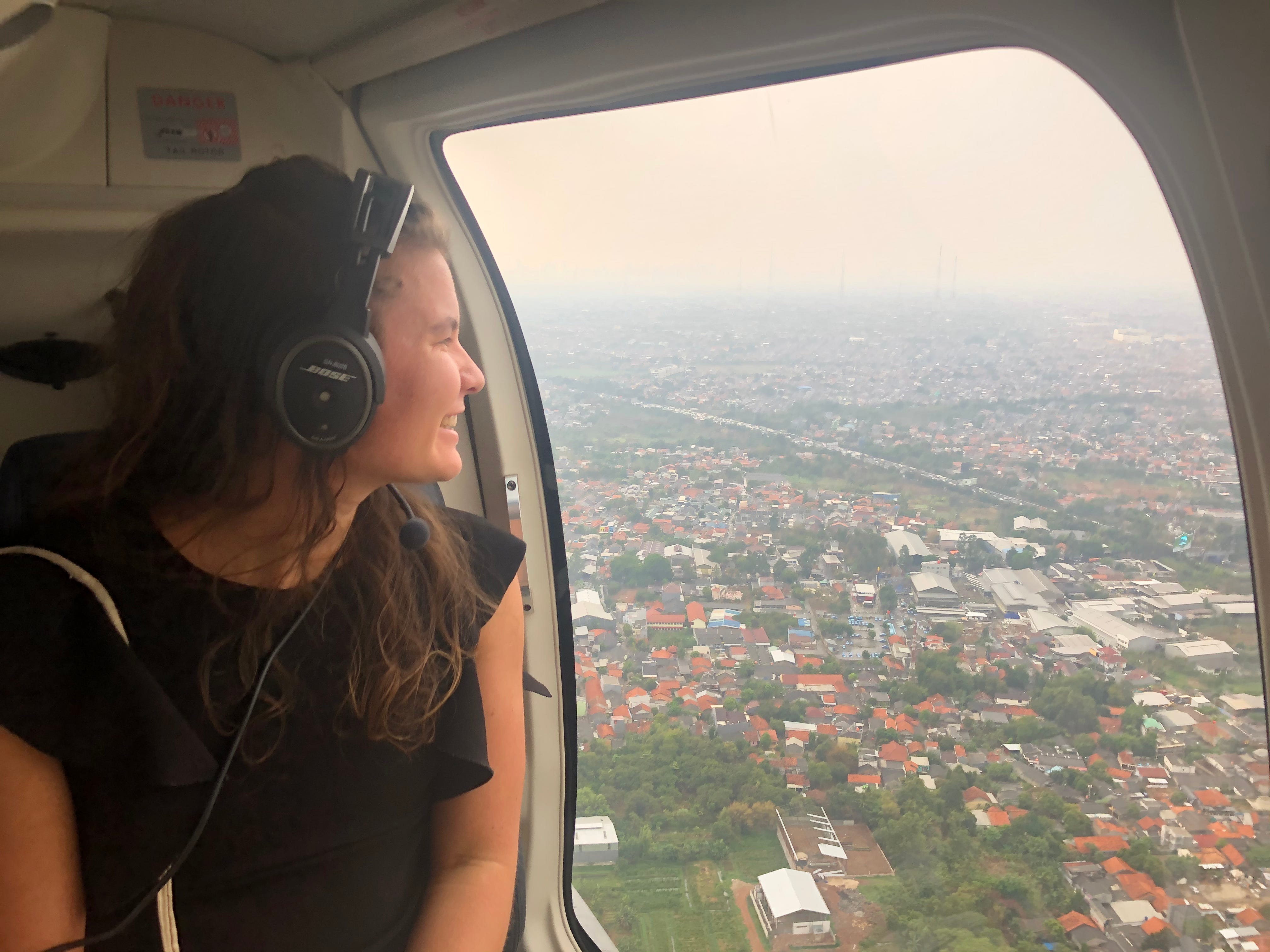
Mid-2020, in one of the funnier ironies of my life, the beginning of my move to Hawaiʻi coincided with a job transition. I would now help lead my publication’s global team, alongside its existing director—and my frequent boss—Jeremy.
For years, I had whined to Jeremy that it wasn’t fair he got to go to Nigeria, Rwanda, Lebanon, India, and Colombia while my work travel took me to Columbus, Silver Spring, and Decatur. Where were my invitations to slip and slide in the backseat of a 4x4 as we lurched over dried streambeds and haphazard rocks en route to refugee camps? When would I, too, get to hand out business cards at global gatherings that I arrived at on motortaxis or e-bikes?
After five years on the job, in 2019, Jeremy asked me if I wanted to go to a conference in South Africa—with five days’ notice. I wouldn’t be able to extend any travel; I was president of my block club, and we were throwing a party within a day of when I’d return. When I got the call, I was concluding a month where one weekend I had visited friends in Savannah, the next week I had driven to and from Eastern Tennessee, and the final week, I had flown back to conference in Peach Tree City and then flowing to a wedding in San Antonio.
I went home to grab my passport and flew out. I arrived in Johannesburg around noon, holding my breath that Americans didn’t need visas (we didn’t but actually in many African countries that is not the case), and befriended a Sri Lankan professor who was waiting for the same shuttle. After enduring an eight hour wait for a ride from the conference—with no communication about the lack of logistics—I finally arrived at convention center that seemed more like a campsite. I still remember craning my neck out the window when my driver pointed out a giraffe. The next morning, the monkeys came for everyone on the outdoor deck’s breakfast. Those of us not from South Africa took pictures.
Later that year, Jeremy and I traveled to Indonesia for a conference and some networking. (I sorely missed the camping convention when I developed permanent goosebumps from the blistering air conditioning.) Most of my memories from that trip involve opting out of the official sightseeing activities in favor of finding my own walking tour of Jakarta, where I saw Barack Obama’s elementary school and visited a museum about Indonesia’s survival of Japanese and Dutch occupation. Notably, within several years of its liberation, the U.S. helped overthrow its government and supported a 41-year dictatorship. (At the South Africa event, I had paid $50 for a city tour only for the operator to share all their information over an unintelligible PA system and offer us two stops: one at the Nelson Mandela statue—and one at a local mall.)
Perhaps the wildest moment came when Jeremy and I had a meeting with a prominent local family and arrived via their helicopter. We took off from a helipad—on top of a church. After dipping our toes into opulence, we plunged into it, traveling to Singapore, where we continued to build relationships with more Christian leaders. One night, I went clubbing at the rooftop bar of the hotel where Crazy Rich Asians ends. IYKYK.
I took these trips before the pandemic, before Hawaiʻi, before I had officially transitioned to the global team. Ironically, before going to South Korea last year, I had only made it back once for Asia work travel (Thailand, for three days in 2022, in between stays in the Dominican Republic and Las Vegas). Since 2021, I’ve made five (!) trips to East Africa, three to Latin America, and one to Australia—all with Honolulu as my home base.
To be clear, no one needs to read this blog and feel sorry for me, even if I tell you that traveling one way to Africa generally takes me more than a day and most recently involved sleeping on artificial grass in the Doha airport during an eight-hour layover. But as I reached half a decade of this lifestyle, I became increasingly aware of the opportunity cost of these once-in-a-lifetime experiences.
Much of this was just the defacto reality of trying to be a citizen of the world living on an extinct volcano in the middle of the Pacific Ocean. In Chicago, I once took a day trip to New York City to interview the Hungarian foreign minister at the United Nations. (Side note: I also ran into Rachel from The Bachelorette that same day.) In Hawaiʻi, for the weddings I didn’t skip—which, for those I did, often strained those relationships—I tried to align them with existing work travel, which often turned into three- or four-week trips.
Anyone who travels for work knows the illusion of this glamour—but this was more than rationalizing having to watch an entire season of a show because I was on a plane the entire day (looking at you, This Is Us, The Franchise, and Silo). The real cost was how unreliable I’d become to the communities and people I cared about: missing friends’ parties, protests, church gatherings, game nights, and rehearsals for hobbies I loved. Many of my closest friends also had aggressive travel schedules; sometimes I wouldn’t see them for months.
Meanwhile, I kept postponing things that required consistency: a cohort I wanted to launch this year in response to our grim political moment, and training to become a foster parent. (When I applied earlier this year, they told me I’d need a new job before I could begin.)
As of several weeks ago, I’m no longer the global managing editor of Christianity Today. I’m still processing the end of this era of my life. I don’t think I’ve been on the island more than 70 percent of the year in any year I’ve lived here.
I just got a new passport—this one has 48 pages, no extra charge. The 24-page one I turned in two years before its expiration date.
I doubt I’ll fill this one anywhere close to capacity. I’ll be seeing so much more of Hawaiʻi now. My life will be far more grounded. I know it will still be rich.
But you're the most connected travel person I know, so part of the opportunity cost of not being around for local community is gaining a large network of friends and acquaintances spread across the world who might do anything with/for you with zero notice. This is something few people have.
If you decide that these passport pages need filling, you're always welcome at our side of the pond.
Also, let us know if you pick up podcasting again.