
‘I’ve stopped making new friends’
Living in a place where everyone you love leaves.

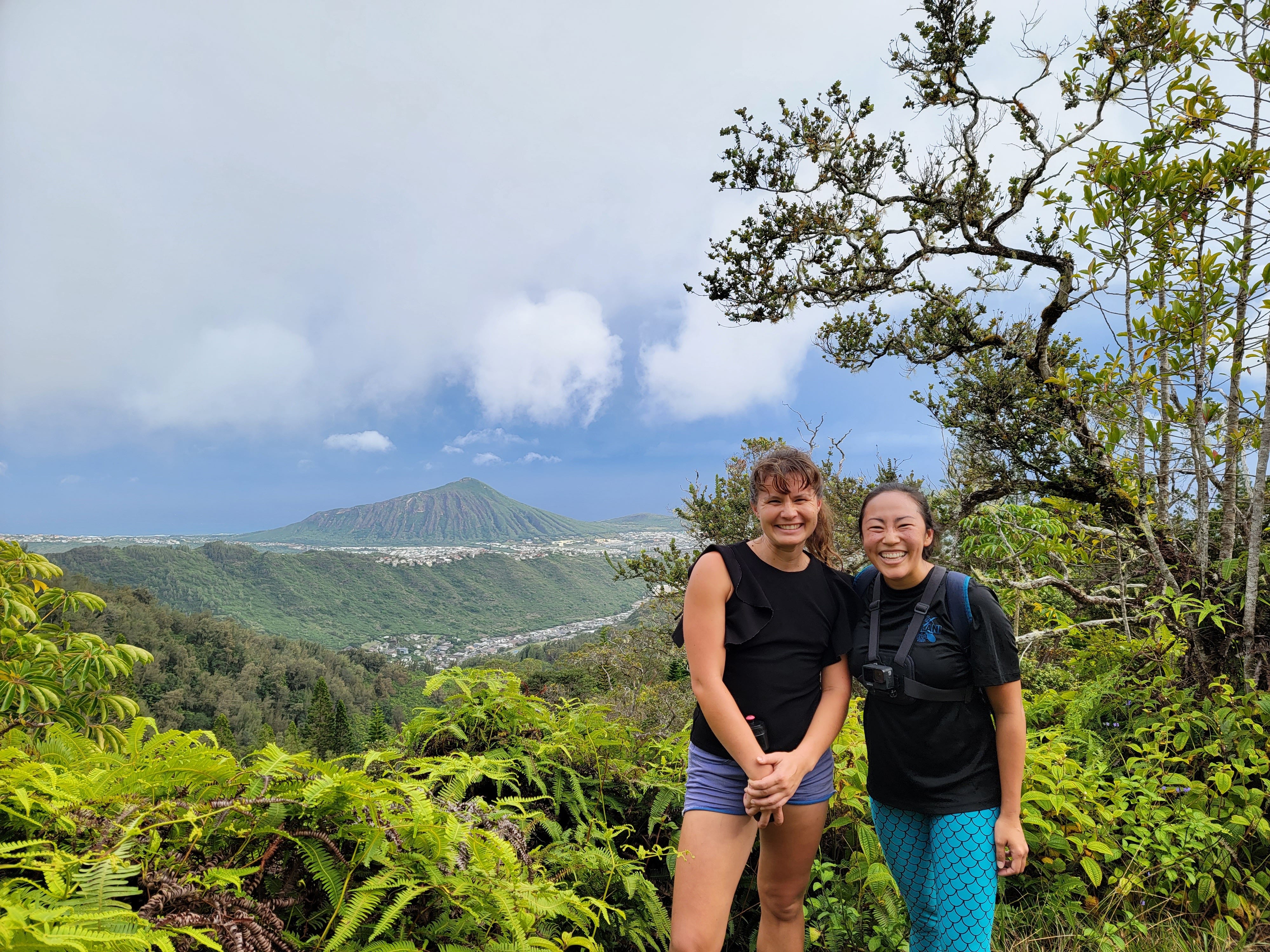
A couple of months after I moved to Hawaiʻi, I went on a walk with someone I hoped would become a good friend. She and her husband lived in my neighborhood, we attended the same church, and we were around the same age. Then—she broke the news to me.
“I’ve stopped making new friends,” she told me. “Everyone leaves after three to five years, and it’s just too much.”
I was startled. She knew I was new. Why had she even agreed to the walk?
But I took her seriously and assumed she had chosen her words carefully. No, she was not interested in pursuing this relationship. I never hung out with her one-on-one again and haven’t seen her since I stopped going to that church six months later.
As blunt my never-friend’s admission was, nearly five years after living here, I understand the defiance behind it. A couple of weeks ago, a friend sent me a picture of himself and seven others backpacking in the Sierra Nevadas. Two of those people were strangers; the other five were good friends who had moved off-island since March.
During my time here, I’ve wondered how much responsibility I bear for the relational attrition relentlessly battering my social life. For instance, why haven’t I just sought friendships with people who have roots?
Having made several major moves in my adult life, I’ve observed that building friendships with locals is often stymied by existing community be it a niece’s birthday party, a sister’s baby shower, their son’s soccer game, and their aunty and uncle’s anniversary get-together. Beyond familial obligations, it’s hard for transplants to break into friendship circles built over decades. (The only way in I’ve observed has been romance.)
The pandemic didn’t make this task any easier. When I arrived in January 2021, the island was only half-awake—festivals had paused and some churches still met online—yet the beaches were full of newcomers. Remote workers from San Francisco and Seattle had descended en masse. Ninety thousand people applied to Movers and Shakas, a program that offered to pay for the airfare of those interested in temporarily relocating to Hawaiʻi. One of my friends was rejected but added to a Slack group where participants met up for dinners and weekend trips. When I joined them for dinner one night, they were planning getaways to Maui and Kona. They all planned to return to the mainland once their offices inevitably (?!) reopened.
Perhaps the conviction that pandemic would imminently end and the grind would soon commence again only gave everyone urgency to Become Friends Now. This YOLO spirit—coalescing with “we-just-met-in-a-hostel-60-seconds-ago-and-now-we’re-going-to-Rome” energy—made it easy to feel like I was reliving college. For a minute, it felt like every weekend I was driving in a convertible to a beach I’d never visited before, sipping a can of lilikoi punch and taking sunset photos with my besties, toes in the sand.
Sure, some of these people I adventured with immediately receded into the background, but others entered my close friend circle, even as they continually renegotiated their relationship with the island. I attended going-away parties for people who never went away—and for people who came back. I joined a running group with people the military later sent to Guam. I saw people for three weeks in a row at a Sunday volleyball meet-up before they told me they were heading to Australia for the next two months, and then maybe Bali for an undefined period of time. I said goodbye to the person who had lived here for five years and the person who had lived here for five months, and befriended someone new at the farewell party. I bristled while fending off unremitting queries of “How long do you want to stay in Hawaiʻi?” (I plan to write on this very question soon.)
After pondering relational attrition for nearly five years, I’ve realized that people come to Hawaiʻi for numerous reasons, but the cost of living and geographical distance make it hard for most to fully imagine it as home. I know a handful of folks who have bought condos since relocating here, but most of my friends can’t fathom the cost of a mortgage and HOA fees. They didn’t move here wanting to keep all their options open, but everything here feels tentative—and when they want permanence, they look for markers. Even if they won’t be able to afford a house in Los Angeles or San Francisco or New York, their families will be within driving distance—and the tropical breeze that made each day feel as magical and tedious as Neverland will be a full plane ride away.
I don’t begrudge anyone for leaving, for following the ache that tenderly leads you to the next chapter of your life. (Was this not my breakup with Chicago?) My life is strangely rich due to the margin created by people leaving and the new relationships I’ve had space to foster. But of course, it’s poorer too. Once, we all lived in Hawaiʻi. We lost track of time treading water at Sherwoods, potlucked aimlessly at Ala Moana, camped at Mokuleia, sat around my candlelit coffee table eating curry and rice, and hiked past the ti leaves and into the clouds.
Love this, Morgan! You tap into something the majority of people don't talk about, don't know how to talk about, or don't know how to share. Building roots is hard and painful, but leaving is also painful in its own way. I think i am on the flip side of this, i have spent years leaning into building friendships with those who have roots and have now become this rooted person who is always there, and now I find myself in a season where I want to meet the ones who move often or become like them so that I can meet new friends. I need new friends because the rooted ones have reached a stage where they no longer grow.
Can picture all this as I read it